
Cash out might be the most profitable feature bookmakers have ever introduced — for themselves, not for you. That sounds cynical, but the maths backs it up. Every cash-out offer is a second bet embedded inside your first one, priced with a margin that favours the bookmaker. Used carelessly, it drains expected value from winning positions more often than it rescues you from losing ones. Used selectively, it can be a genuine risk-management tool. The difference lies in understanding exactly what you are buying when you press that button.
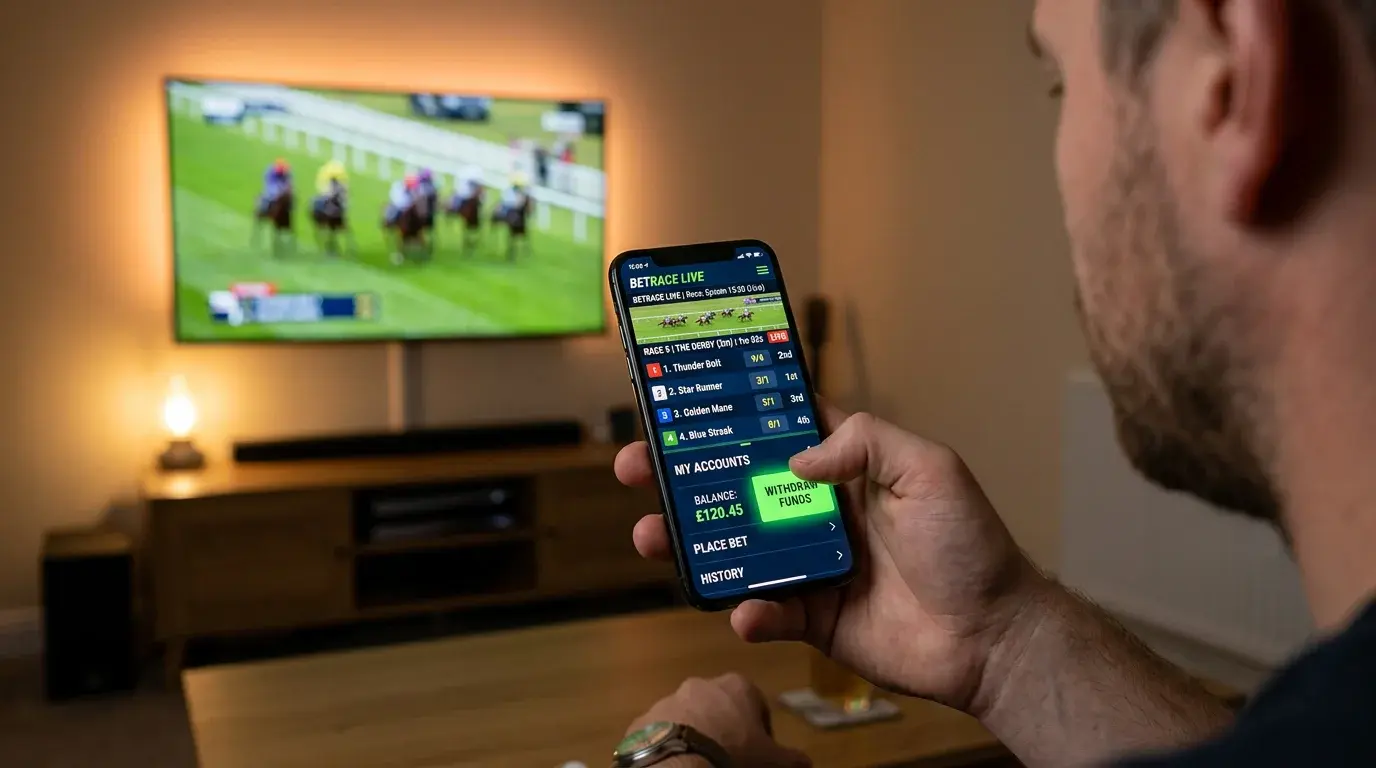
With 43% of all UK betting now happening on mobile — and that figure climbing to 76% among 18-24 year olds — cash out has become a default feature of the betting experience. It flashes on your screen during every race, updating in real time, creating an emotional tug that is very difficult to resist when your horse is leading turning into the straight. The bookmakers know this. They designed it this way. Your job is to decide when the maths works in your favour and ignore the button the rest of the time.
Cash Out Calculations: Identifying Bookmaker Profit Margins
Cash out is not a special product. It is a back-and-lay calculation that any exchange trader would recognise. When you place a bet at 6/1, you have effectively bought a position. If the horse’s in-play price moves to 3/1 because it is travelling well, the bookmaker offers to buy that position back from you at a price that reflects the new odds minus their margin. The cash-out value is what you would receive if you laid the same bet on an exchange at the current in-play price — except the bookmaker takes a cut.
That cut is the hidden cost. A typical bookmaker’s cash-out margin sits between 5% and 15%, depending on the operator, the sport, and the timing. So if the fair cash-out value of your position is £50, the bookmaker might offer you £43-47. The missing pounds are the operator’s profit on the transaction. Over time, accepting cash-out offers at these terms systematically reduces your returns compared to simply letting bets run to completion.
The calculation also accounts for the bookmaker’s risk. If your horse is leading by ten lengths with two fences to jump, the cash-out offer will be high — but not as high as the expected value of letting the bet run, because the bookmaker still factors in the small probability of a fall, an unseat, or a dramatic late challenge. They are buying certainty from you at a discount, and you are selling it because the cash in your hand feels more real than the potential payout two fences away.
What most punters do not appreciate is that the cash-out price updates are not smooth. They are calculated from a model that the bookmaker controls, and they can jump, lag, or disappear entirely during volatile moments in a race. I have seen cash-out offers vanish for five seconds during a crucial passage and reappear at a significantly lower value. The bookmaker is not obligated to offer cash out at any particular time, and the terms of service make this clear even if the app’s slick interface implies otherwise.
Full, Partial and Auto Cash Out: Choosing the Right Option
Full cash out settles the entire bet immediately. You receive the offered amount and the original bet is closed. This is the simplest version and the one most people use, but it is also the most destructive to expected value because it removes all of your upside in exchange for a guaranteed but discounted payout.
Partial cash out is more interesting and far more useful. It lets you settle a portion of your bet — say 50% or 75% — while leaving the remainder running. If you backed a horse at 10/1 with a £10 stake and the cash-out offer on the full bet is £60, a 50% partial cash out gives you £30 in your account while leaving a £5 effective stake still running at whatever the in-play odds are. This is functionally similar to what exchange traders call “greening up” — locking in some profit while maintaining exposure to the outcome.
Partial cash out works best when your horse is in a strong position but the race is not over. You take enough off the table to guarantee a profit regardless of what happens, but you keep enough running to benefit from a win. The trade-off is mathematical: the partial cash-out value still includes the bookmaker’s margin on the settled portion, so you are paying a cost for the security. Whether that cost is worth it depends on how much the guaranteed portion matters to your bankroll management.
Auto cash out sets a target value. You tell the platform: cash out automatically if the offer reaches £80. This is useful if you will not be watching the race — at work, in a meeting, or asleep for an overnight international race. The risk is that the auto trigger fires at a momentary peak and your horse goes on to win at a much higher return. With online betting turnover down £1.6 billion since 2022 in real terms, operators have every incentive to make auto cash out attractive, because every settled bet reduces their liability.
When Cashing Out Costs You Expected Value
The default position should be: do not cash out. That sounds absolute, and it is meant to. Cash out is a tool for specific situations, not a general habit. Every time you cash out a winning position, you are accepting less than the expected value of letting the bet run. Over hundreds of bets, that shortfall compounds into a significant drag on your overall returns.
The specific situations where cash out can be justified are narrower than most punters think. The strongest case is when new information has emerged that changes your assessment of the horse’s chance. If you backed a horse to win and it is visibly not handling the going, or the jockey has taken a pull and looks to be in trouble, or a rival has moved into a dominant position, the cash-out offer gives you a chance to recover something from a bet that has deteriorated. You are not selling a winning position; you are cutting a losing one.
The second justifiable use is bankroll protection. If a single bet represents a large proportion of your total bankroll and you are in a position to lock in a life-changing or session-saving profit, the mathematical case for cashing out is weaker than the practical case. Bankroll preservation outweighs expected value maximisation when the amounts are significant relative to what you can afford to lose. A £500 cash-out offer on a bet that might pay £800 if it wins is objectively worse in expected value terms, but if losing that £500 would end your betting for the month, taking it is the correct decision for your circumstances.
What is never justified is cashing out for emotional reasons — because you are nervous, because you do not want to watch, or because the green number on your screen feels good right now. Those are the exact impulses the cash-out button on your betting app is designed to exploit. Recognising the difference between strategic cash-out and emotional cash-out is the single most important distinction you can make.