
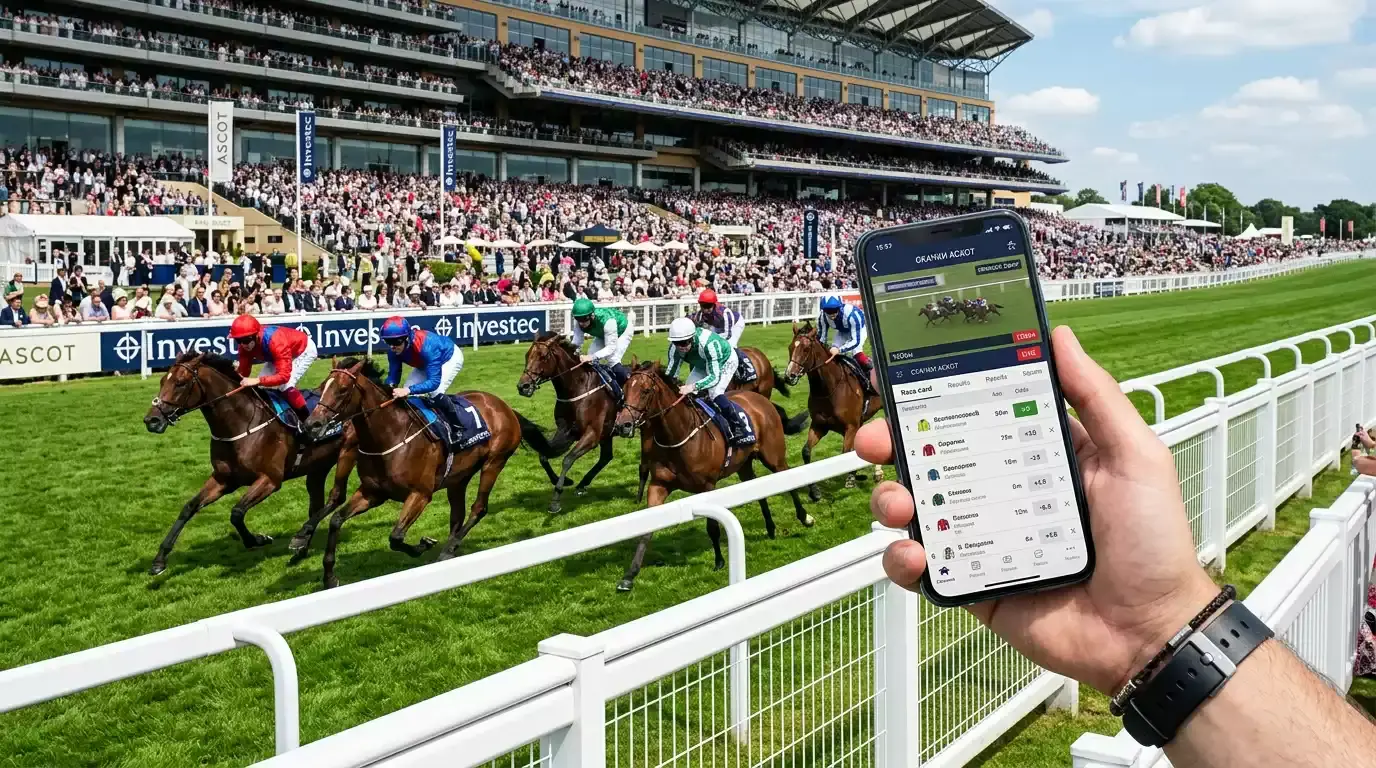
Horse racing betting apps in the UK are no longer a convenience – they are the primary interface between punter and bookmaker. The numbers make this plain: 43% of all bets placed on British racing come through a mobile device, and among bettors aged 18 to 24 that figure jumps to 76%. The app is the betting shop, the racecard, the live broadcast and the cashier’s window rolled into a screen you carry in your pocket.
I test betting apps the way I test anything else in this industry – by using them under real conditions, with real money, on real race days. The marketing copy never tells you what matters: how quickly the stream loads when the signal at Cheltenham is patchy, whether the racecard is deep enough to make a decision without opening a second app, or how many taps it takes to cash out a position when a horse is weakening at the second-last. Those details determine whether an app is a functional betting tool or a decorated deposit screen.
What follows is a feature-by-feature breakdown of what separates a strong horse racing app from a mediocre one. I am not ranking specific operators – the best app for you depends on which features you prioritise. Instead, I am giving you the framework to evaluate any app yourself, based on the criteria that actually affect your betting.
App Evaluation Criteria: Testing Speed, Streaming, and Stability
Walk into any betting-related forum and you will find people arguing about which app is “best” based on vague feelings and loyalty. That is not analysis – it is brand attachment. I evaluate horse racing betting apps across six specific criteria, each weighted by how much it affects the punting experience on race day.
The first criterion is streaming quality and latency. An app that offers live racing but delivers a feed that freezes mid-race or runs 15 seconds behind the television broadcast is worse than no stream at all, because it creates the illusion of live information while actually showing you the past. Streaming reliability is the single most important feature for anyone who bets in-play or uses visual cues from the race to inform cash-out decisions.
Second is racecard depth. A betting app that shows you odds and a horse’s name without recent form, going preference, trainer statistics or jockey booking is asking you to bet blind. The best apps integrate full racecard data – last five or six runs, distance and course form, trainer strike rates – within the same screen as the betting market. If you have to leave the app to look up form, that is a design failure.
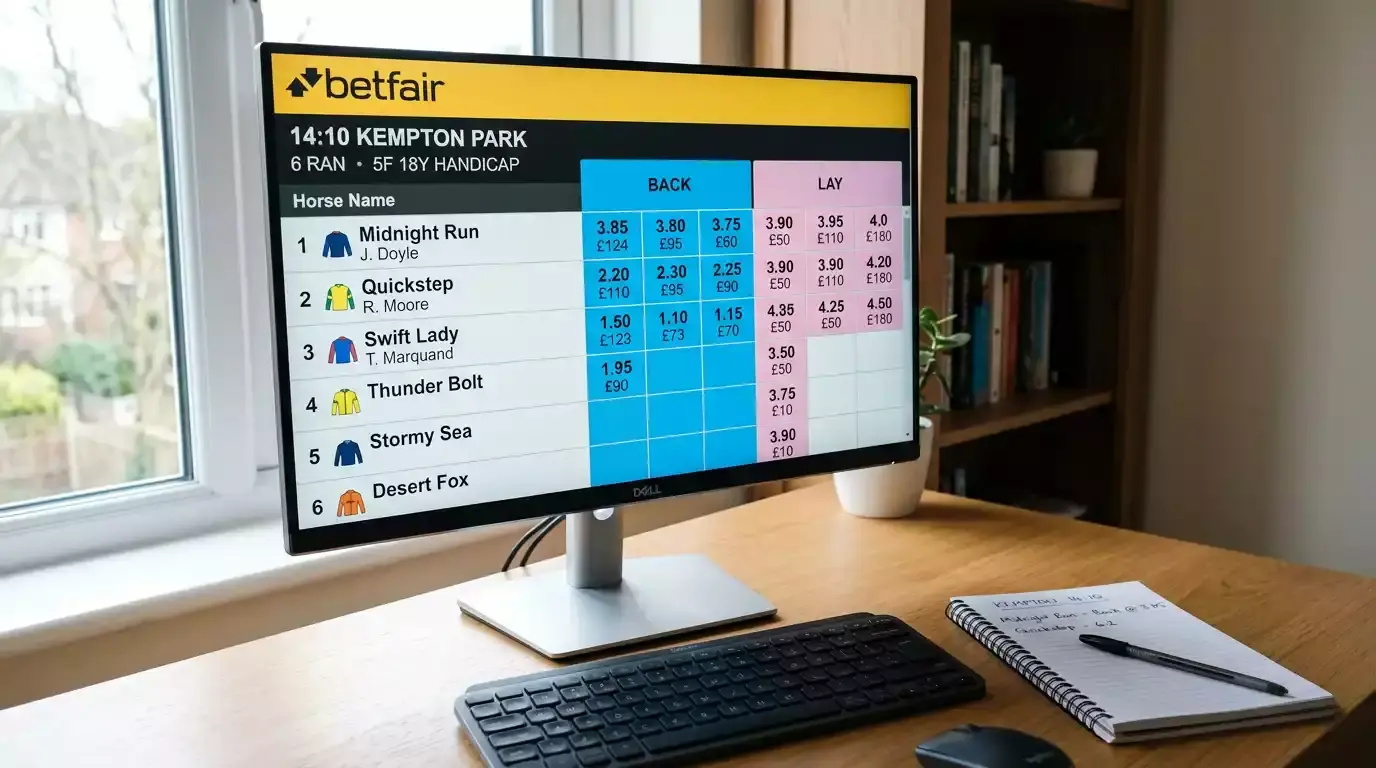
Third is cash-out availability and execution speed. Not all apps offer cash out on all racing markets, and among those that do, execution speed varies. A cash-out offer that takes four seconds to process during a live race is functionally useless, because the market will have moved by the time it goes through. I look for sub-second execution and the availability of partial cash out – the ability to take some profit off the table while leaving a portion of the bet running.
Fourth is the notification system. Push alerts for non-runners, significant price movements, and results allow you to stay informed without keeping the app open permanently. The best implementations let you set alerts by horse, trainer or jockey, so you only receive notifications relevant to your interests.
Fifth is bet placement speed and interface clarity. How many taps does it take to go from finding a horse to confirming a bet? Can you see the potential payout clearly before confirming? Is the each-way toggle obvious or buried? These micro-interactions add up across a day of racing.
Sixth is login and security speed. Biometric authentication – fingerprint or face recognition – should be standard. An app that requires you to enter a username and password every time you open it is adding friction that costs seconds on busy race days. Those seconds matter when a price is shortening in front of you.
Live Streaming Quality: Latency, Coverage and Reliability
Royal Ascot drew an aggregate television audience of five million across its five-day programme in 2025, with a 20% jump in viewers on the final day. Those numbers tell you something about demand – and about the infrastructure pressure that major festivals place on streaming platforms. I have sat in a pub during Gold Cup day watching one bookmaker’s stream buffer endlessly while a friend’s app on a different network ran without a hitch. The technology is not equal across operators, and the gaps become most obvious when it matters most.
Coverage varies between apps. Most major UK bookmakers stream all British and Irish racing covered by the Satellite Information Services (SIS) feed, which accounts for the vast majority of daily meetings. Some also carry French racing and selected international fixtures. The differentiator is not whether they stream – nearly all do – but how they stream. Resolution, frame rate and latency separate an app that is genuinely useful for in-play betting from one that is merely decorative.
Latency is the critical number. The delay between what is happening on the course and what appears on your screen typically ranges from three to ten seconds, depending on the operator and your connection. Television broadcasts run on a similar delay, but dedicated racing channels occasionally shave a second or two off. If you are betting in-play, a five-second lag means the price you see might already be stale. I always assume that any in-play odds displayed while watching a stream are lagging reality and adjust my decisions accordingly.
Ninety-five percent of online gambling in the UK happens from the home, which means most punters are streaming over Wi-Fi rather than cellular data. That is generally more reliable, but Wi-Fi can falter if your connection is shared across multiple devices. At the track, cellular performance depends entirely on network density. Major festivals with 60,000-plus attendees generate enormous data demand in a small area, and streams can stutter or fail entirely. If you are at the racecourse and want a reliable visual feed, the big screen at the course will always beat your phone.
Funded-account requirements are worth noting. Most bookmakers require either an active balance or a bet placed within the last 24 hours to access their live stream. A few allow streaming with any registered account, funded or not. The terms shift periodically, so check before relying on a particular app for festival coverage. The access model also means that holding minimum balances across two or three apps effectively gives you backup streams – useful insurance on days when one platform’s infrastructure buckles under load.
Racecard and Form Data Within the App
I used to carry a Racing Post to the track like a security blanket. Form data was something you consulted in print, with a pencil and a cup of tea. Those days are gone for most punters, and the quality of in-app racecard data has become one of the clearest dividing lines between apps that serve serious racing bettors and apps that happen to include racing alongside football and tennis.
The baseline I expect from any racing app is the last six runs for each horse, including finishing position, distance beaten, going, course, class and jockey. That gives you enough to assess recent form in context. Better apps layer on trainer and jockey statistics – strike rates, recent form, course-specific records – and present the horse’s performance by going type, distance range and track configuration. The best integrate speed figures or sectional timing data, though this remains uncommon.
What I am really looking for is whether the racecard and the betting market live on the same screen. If I need to tap into a separate section to see form and then navigate back to place a bet, the app has introduced friction that costs time and breaks analytical flow. The ideal experience is a racecard where each runner’s odds are visible alongside their form summary, so the assessment and the action happen in one place.
Going information is another differentiator. Some apps display the official going for the meeting but do not update it if conditions change after the initial declaration. Others pull live going data and flag changes with a notification. On days where rain arrives mid-card and the ground shifts from good to firm to good to soft, that update can reshape the entire race. An app that leaves you working with stale going data is an app that is costing you information.
Trainer and jockey booking patterns offer an underrated edge for mobile bettors. When a top jockey is booked for a horse that would not normally attract that rider, it is a signal. Apps that highlight jockey changes or flag notable bookings surface this information passively – you see it while scrolling the card rather than having to hunt for it. Over a full Saturday programme of seven or eight races, these small informational advantages stack up.
I should add that no app fully replaces dedicated form resources. The Racing Post’s own app, specialist form databases and speed-figure services offer depth that betting apps do not match. But for the majority of punters who want to research and bet in one place, in-app racecard quality is the feature that makes or breaks the mobile experience.
Cash Out on Mobile: Speed, Partial Cash Out and Auto Cash Out
The 2025 BHA Racing Report acknowledged the challenges of a tightening betting environment, and cash out has become one of the tools punters use to manage risk within it. I think of cash out as a position-management instrument – not a panic button, but a deliberate mechanism to lock in profit or limit loss before a race concludes.
Full cash out closes your bet entirely before the result is settled, paying you a calculated amount based on the current odds and the state of the race. If you backed a horse at 8/1 and it is travelling well at the two-furlong pole, the cash-out offer might be significantly higher than your stake. If it is struggling, the offer will be below your original outlay. You are essentially selling your position back to the bookmaker at market price.
Partial cash out is the more sophisticated option and, in my experience, the more useful one. Instead of closing the entire position, you take a portion of the profit off the table and leave the rest running. If you staked £20 at 6/1 and the cash-out offer reaches £80, you might cash out £50 – securing a guaranteed profit – while leaving the remaining £30 of value in play. If the horse wins, you collect the residual payout. If it fades, you still walk away with the £50 already banked.
Auto cash out lets you set a target figure in advance. You tell the app to cash out automatically if the offered value reaches, say, £100. The app monitors the race and executes the moment that threshold is hit. This is particularly useful for ante-post bets where the price shortens over weeks and you want to lock in a profit without watching the market daily.
Execution speed on mobile is where the practical differences emerge. During a live race, conditions change by the second. A cash-out offer that appears at £90 might drop to £60 in the time it takes the app to process your request. I have had cash outs rejected mid-race because the odds shifted between my tap and the server’s confirmation. The best apps minimise this lag, but it is never zero. Partial cash out is less time-sensitive because you are not trying to capture a fleeting peak – you are taking a deliberate slice of value.
Stewards’ enquiries and falls create suspension periods where cash out is unavailable entirely. If a horse falls at the last in a jumps race, the market recalibrates instantly and cash-out offers either vanish or change dramatically. Understanding these dead zones prevents frustration. Cash out is a tool, not a guarantee, and it works best when used proactively rather than reactively. For a more detailed look at the mathematics behind these decisions, the guide to cash out in horse racing covers expected-value analysis and strategic frameworks.
Push Alerts: Price Movements, Results and Non-Runner Updates
I missed a non-runner withdrawal once because I had my phone on silent and did not check the app between the morning declarations and the off. The horse I had backed in the following race was significantly affected by the reshuffled market, and by the time I noticed, my odds had shortened to the point where the value had evaporated. That experience is why I now treat push notifications as essential infrastructure, not optional noise.
The number of horses in training across Britain fell to 21,728 in 2025 – a 2.3% drop from the year before, extending a decline of roughly 1.5% annually since 2022. A smaller horse population means more non-runners as a percentage of declarations, because the same horses are being aimed at multiple targets and late withdrawals are increasingly common. An app that alerts you the moment a horse is scratched gives you time to reassess your bets, check for Rule 4 implications and decide whether to proceed or seek a cash out.
Price movement alerts are equally valuable. Significant market movers – a horse drifting from 6/1 to 10/1 or contracting from 8/1 to 4/1 in the hour before the race – are information. Drifters can signal negative intelligence from connections, while steamers (rapid shorteners) often indicate confidence. Not every price move is meaningful, so I set my alert threshold at two points of movement or more to filter out routine fluctuations.
Result notifications matter less for active bettors who are watching races live, but they become critical when you have ante-post bets running in races you cannot follow in real time. Getting an instant result ping means you can evaluate your portfolio and plan your next move without refreshing the app repeatedly.
The most useful implementations let you customise alerts by individual horse, trainer or jockey. If you follow a particular trainer’s stable or have an ante-post interest in a specific horse, targeted notifications keep you informed without flooding your lock screen. Apps that only offer blanket “racing alerts” without this granularity tend to either overwhelm you with irrelevant pings or leave you missing the one notification that mattered.
Account Security, KYC and Deposits on Mobile
Opening a betting account in 2026 involves more friction than it did five years ago, and the mobile experience is where most of that friction concentrates. Understanding the process before you start saves time and prevents the kind of mid-festival frustration I see every March when new punters cannot get verified in time for the Cheltenham opener.
Know Your Customer verification – KYC – is legally required by the UK Gambling Commission for every licensed operator. You will need to provide proof of identity (passport or driving licence) and proof of address (utility bill or bank statement). On mobile, this typically means photographing documents with your phone camera and uploading them through the app. Most operators use automated verification systems that can approve standard documents within minutes. Non-standard documents, poor image quality or mismatched details can trigger manual review, which takes longer – sometimes 24 to 48 hours.
The affordability check threshold adds another layer. Since February 2025, net monthly deposits of £150 or more trigger enhanced checks. At this level, the operator may ask for additional financial documentation to verify that your betting activity is affordable. The threshold was previously £500, and the reduction has widened the scope of who gets checked. If you deposit steadily through a month and cross that line, expect a prompt for further information. This applies per operator, not across your total betting activity, so spreading deposits across multiple accounts does not bypass the mechanism.
Deposit methods on mobile are straightforward but worth knowing. Credit card gambling has been banned in the UK since April 2020, so deposits are limited to debit cards, Apple Pay, Google Pay, bank transfer and selected e-wallets. Apple Pay and Google Pay are the fastest for mobile users – typically a single biometric confirmation and the funds are available immediately. Debit card deposits are similarly quick. Withdrawal times vary more: e-wallets tend to process within hours, while bank transfers and card withdrawals can take one to three business days.
Biometric login – fingerprint or facial recognition – is offered by every major UK betting app and I strongly recommend enabling it. Beyond the obvious security benefit, it eliminates the delay of typing credentials when you need to get into the app quickly. On a busy race day with seven or eight races to assess, the cumulative time saved by instant biometric access is not trivial. Coupled with app-specific PIN codes and two-factor authentication options, modern betting apps are substantially more secure than the password-only logins of a few years ago.