
Horse racing odds explained in plain terms is the single most valuable thing I can offer anyone who bets on the sport – because every other decision you make depends on understanding what those numbers actually mean. I have spent the better part of a decade watching punters hand over money they did not need to lose, purely because they treated odds as decoration rather than information. In a market that generates £766.7 million in online gross gaming yield each year, the difference between taking 5/1 and 4/1 on the same horse is not cosmetic. It is a 20% swing in your return, compounding across hundreds of bets into the kind of gap that separates profitable punters from the rest.
This is not a glossary. I am going to walk you through fractional and decimal formats with actual numbers, explain why the starting price and early odds are two different animals, show you how bookmakers build their profit margin into every race, and then take you inside the mechanics of Best Odds Guaranteed – a feature that too few punters exploit properly. By the end, you will look at a racecard and see money where you currently see fractions.
A quick note on format. I have structured this piece to work whether you are placing your first bet or your five-thousandth. The early sections lay the groundwork; the later ones deal with margin analysis and exchange pricing. Read it straight through or jump to whatever is relevant to where you are right now.
Fractional Odds: Calculating Payouts and Traditional UK Pricing
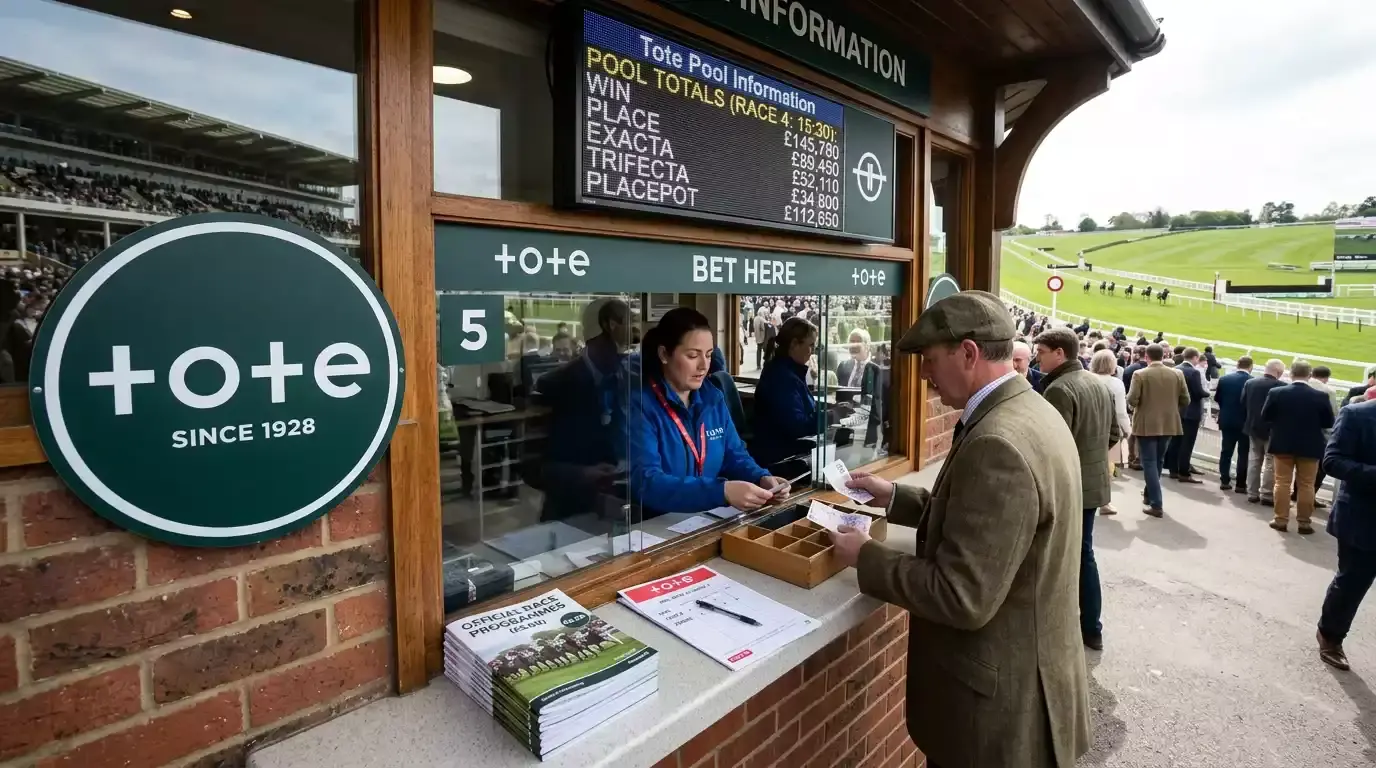
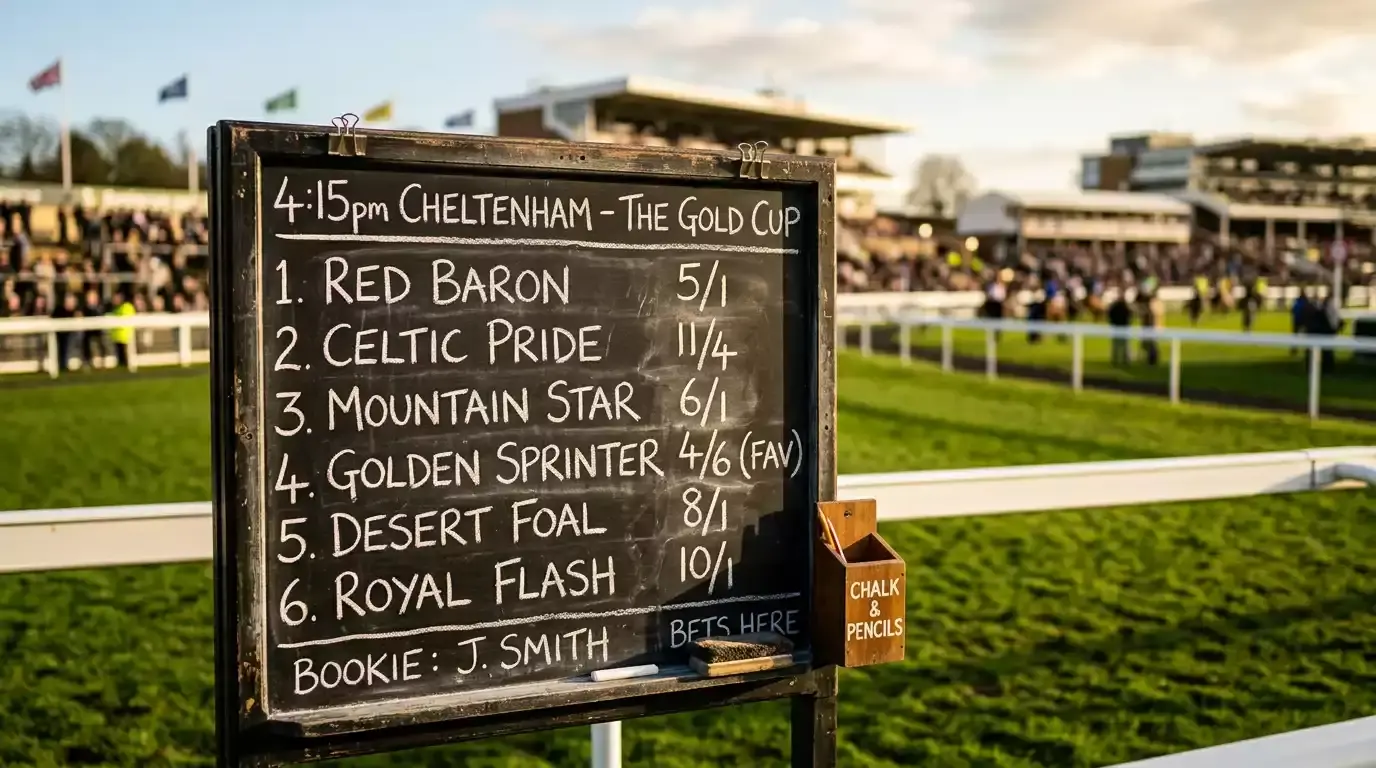
The first time I stood at Cheltenham as a teenager, I stared at the on-course boards and genuinely thought the numbers were some kind of code. They are not, of course, but I understand why people find fractional odds intimidating – they look like maths homework. Let me strip that mystique away in about two minutes.
A fractional odd is written as two numbers separated by a slash: 5/1, 11/4, 4/6. The number on the left is your potential profit for every unit of stake represented by the number on the right. That is it. At 5/1, you profit £5 for every £1 you stake. Your total return is £6 because you get your stake back too.
Let me walk through three examples that cover the range you will see on any racecard.
Example 1 – a straightforward outsider at 5/1. You place £10. Your profit if the horse wins is £50 (10 multiplied by 5). Total return: £60. This implies the bookmaker thinks the horse has roughly a 16.7% chance of winning, which we get by dividing 1 by (5 + 1) and multiplying by 100.
Example 2 – an awkward fraction at 11/4. You place £8. Your profit is £22 (8 divided by 4, multiplied by 11). Total return: £30. The implied probability here is 26.7%. These mid-range prices are where most competitive handicap runners sit, and they are the prices that trip people up because the arithmetic feels less intuitive. A quick shortcut: divide the first number by the second and you get the profit multiplier per pound. 11 divided by 4 is 2.75, so every pound staked returns £2.75 in profit.
Example 3 – an odds-on favourite at 4/6. Now the left number is smaller than the right, which means you are risking more than you stand to gain. A £6 bet returns £4 in profit, total £10. The implied probability is 60%. Odds-on prices indicate the bookmaker – and the weight of money from other bettors – considers this horse more likely to win than to lose. The mistake many beginners make is assuming odds-on means a safe bet. It means a bet with a lower payout relative to stake, nothing more.
Implied probability is worth understanding because it lets you compare the bookmaker’s view with your own. If you genuinely believe a horse has a 30% chance of winning and the bookmaker is offering odds that imply only 20%, you have found what experienced punters call value – the horse’s price is longer than it should be. That concept runs through everything else in this article.
One more thing to note: you will occasionally see prices written as “evens” or “EVS” on a racecard. Evens is 1/1. A £10 bet returns £20 – £10 profit plus your £10 stake. The implied probability is 50%.
Decimal Odds and How to Convert Between Formats
I resisted decimal odds for years. Fractional felt like home. Then I started placing accumulators and suddenly I understood why the rest of Europe had moved on – decimal makes multiplication painless.
A decimal odd represents your total return per pound staked, including the stake itself. So 5/1 in fractional becomes 6.00 in decimal. You multiply your stake by the decimal odd and that is your total return. £10 at 6.00 = £60. No mental gymnastics required.
The conversion formula is simple. Take the fractional odd, divide the first number by the second, and add 1. For 11/4: 11 divided by 4 = 2.75, plus 1 = 3.75. For 4/6: 4 divided by 6 = 0.667, plus 1 = 1.667. Odds-on prices in decimal are anything below 2.00 – that 2.00 threshold is the equivalent of evens.
Where decimal really earns its keep is in multiple bets. If you are building a treble across three races, you multiply the decimal prices together. A treble at 3.00, 4.50 and 2.20 gives a combined decimal of 29.70. Multiply by your stake and you have your return. Try doing that cleanly with 2/1, 7/2 and 6/5 in fractional and you will see why accumulators practically demand decimal notation.
Converting implied probability from decimal is even easier than from fractional. Divide 1 by the decimal price and multiply by 100. At 6.00, that is 1/6 times 100 = 16.7%. At 1.667, it is 1/1.667 times 100 = 60%. Same results as the fractional examples above, just a faster route to get there.
Most UK betting sites let you toggle between fractional and decimal in your account settings. I keep mine on decimal when I am building multiples and switch to fractional for singles, mostly out of habit. There is no strategic advantage to either format – they encode the same information. The advantage is in being fluent enough to read both without pausing, because that pause on a live racecard is where you miss a price movement.
Starting Price vs Early Odds: When to Lock In Your Selection
I once took an early price of 14/1 on a horse at Newbury, spent the morning feeling quite pleased with myself, and then watched the starting price drift to 20/1 as the market corrected. Without Best Odds Guaranteed – which I will get to shortly – I would have left money on the table despite being right about the horse. That experience taught me something important: when you take a price matters almost as much as what price you take.
The starting price, or SP, is the official price of a horse at the moment the race begins. It is determined by on-course bookmakers at the track, based on the weight of money they have taken. Early prices, by contrast, are the odds bookmakers publish the evening before or the morning of a race – sometimes days in advance for major festivals. These two numbers can differ dramatically.
Why the discrepancy? Early prices are set by bookmaker traders using form analysis, market intelligence and competitor pricing. They are educated estimates. The SP reflects actual money flow on the day, including late bets from connections, punters reacting to going changes and the general weight of opinion at the track. A horse whose connections are quietly confident might trade at 10/1 in the morning and contract to 6/1 by the off as informed money pours in.
Average betting turnover per race on core fixtures fell 14.4% in the first quarter of 2025 compared to the previous year. That decline in liquidity means early prices on lower-tier races can be volatile – fewer bets are setting the market, so individual wagers move the line more than they used to. On premier fixtures, turnover held steady, which keeps those markets more efficient.
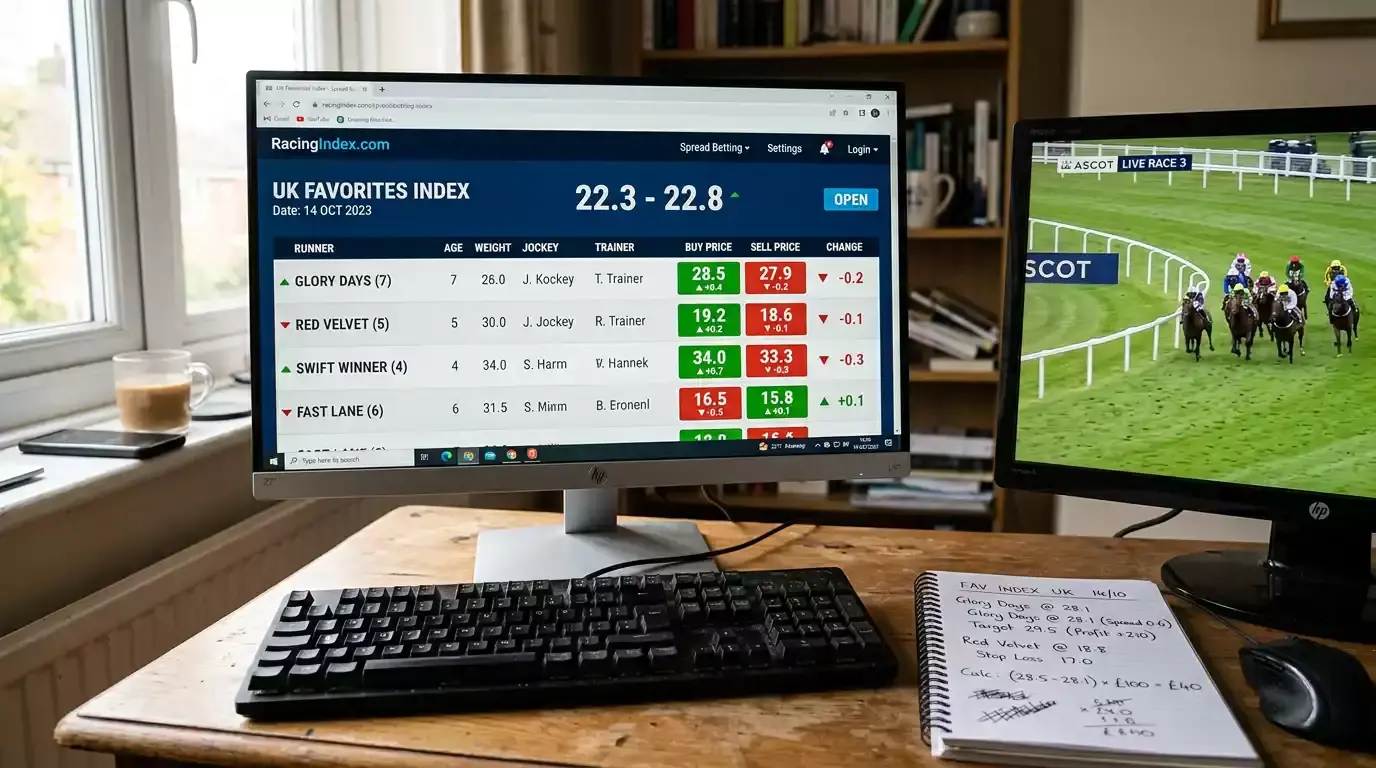
So when should you lock in early? I follow a rough framework. If I have done my homework, I am confident in my selection and the early price looks generous relative to my assessment, I take it. Waiting for SP only makes sense if I suspect the horse will drift – perhaps I think the going will change overnight and soften support. Market movers columns, available on most racing sites by late morning, give you a snapshot of where the smart money is going. A horse shortening from 8/1 to 5/1 in the last hour before the off is a strong signal that informed bettors rate its chances higher than the early compilers did.
There is a third option that many casual punters overlook: taking the early price at a bookmaker that offers Best Odds Guaranteed. You lock in your number and, if the SP is higher, you get paid at the better price. It eliminates the timing dilemma entirely, which is why I cover it in detail further down.
Understanding the Overround: How Bookmakers Build Their Margin
Here is a truth that took me longer to internalise than I care to admit: every set of odds you see on a racecard is slightly wrong on purpose. Bookmakers are not trying to predict the exact probability of each horse winning. They are trying to create a book that guarantees them a profit regardless of the result. The tool they use is the overround.
Think of it this way. If a race had four equally matched horses, the true probability of each winning would be 25%. Fair odds for each horse would be 3/1 (implied probability 25%, four runners totalling 100%). But bookmakers do not offer fair odds. They might price each horse at 5/2, which implies a 28.6% chance per runner. Four times 28.6% is 114.3%. That extra 14.3% above 100% is the overround – the bookmaker’s built-in margin.
The higher the overround, the worse the deal for you. A four-runner race with a 102% book is tight and competitive. A 20-runner handicap with a 130% book is stuffed with margin. I have seen overrounds push past 140% on some Saturday afternoon handicaps at smaller meetings.
Calculating the overround yourself takes about 30 seconds. Convert every horse’s odds to implied probability, add them up. If the total is 118%, the overround is 18%. You can do this manually or use a free odds converter online.
Here is a worked example with a simplified four-runner race. Horse A is 2/1 (33.3%), Horse B is 3/1 (25%), Horse C is 5/1 (16.7%), Horse D is 7/1 (12.5%). Total implied probability: 87.5%. Wait – that is under 100%. In practice you will never see this from a bookmaker because it would mean their book is “overbroke” and they are giving value away. I have rigged this example to make a point: real-world totals always exceed 100%. If those same runners were priced at 6/4 (40%), 5/2 (28.6%), 4/1 (20%) and 11/2 (15.4%), the total would be 104%, giving a tidy 4% overround.
Why should you care? Because over hundreds of bets, the overround is the silent tax on your returns. A punter who consistently bets into 120% books needs to be significantly more skilful than one who shops around for tighter margins. Exchange markets, which I will cover in the final section, typically run closer to 102-103% because they do not carry the same margin structure. The trade-off is liquidity – exchange markets on minor races can be thin, which means you might not get matched at your desired price.
My working rule: before I bet any race, I check the overround. If it is above 115% and I cannot find a compelling reason to bet – a horse I rate at far shorter odds than the market implies – I move on to the next race. Discipline around margin is unsexy. It is also the single biggest edge most punters never use.
Best Odds Guaranteed: How It Works and Which Bookmakers Offer It
If there is one feature in horse racing betting that is almost universally good for the punter, it is Best Odds Guaranteed – and yet half the people I talk to at the track either do not know it exists or do not understand the mechanics well enough to use it properly.
The concept is straightforward. You back a horse at a fixed price – say 10/1 – any time from the evening before through to the off. If the starting price ends up higher – say 14/1 – the bookmaker pays you at the bigger number. If the SP is lower, you keep your original price. You cannot lose on the deal. It is the closest thing to a free edge that exists in betting.
Let me put real numbers on that. You stake £20 at 10/1, so your potential payout is £220 (£200 profit plus your £20 stake). The horse wins and the SP is 14/1. Under BOG, you are paid at 14/1 instead: £300 total return, £280 profit. That extra £80 cost you nothing. No additional stake, no special coupon, no terms to satisfy. It simply landed in your account because you placed your bet with a bookmaker that offers the guarantee.
There are limitations, and they vary between operators. Most restrict BOG to UK and Irish racing only. Some cap the maximum stake eligible – often between £500 and £2,000 depending on the firm. A few exclude certain race types, typically early-morning ante-post markets or races with fewer than three declared runners. The common restriction that catches people out is the time window: many bookmakers activate BOG only from a set time on race day, often 08:00 or 09:00. If you placed your bet at midnight, check whether BOG applies retroactively – at some firms it does, at others it does not.
Andrew Rhodes, the Gambling Commission’s chief executive, noted in a 2025 speech that online betting tracks closely with major racing events and that GGY figures reflect this seasonal pattern rather than any structural decline. That observation matters here because festival periods are exactly when BOG delivers the most value. Large fields, volatile markets and significant late money movement mean bigger gaps between morning prices and SP. I have seen swings of four or five points on festival handicaps, and when BOG converts those swings into profit at no extra risk, the cumulative benefit across a week like Cheltenham or Royal Ascot is substantial.
One detail that surprises many newcomers: your winnings from horse racing bets are not taxed in the UK. The 15% betting duty is paid by the operator, not the punter. Horse racing was also exempted from the 2026 budget increase that pushed Remote Gaming Duty from 21% to 40% for casino products. So when BOG upgrades your payout, every penny of that upgrade reaches your pocket.
My advice is blunt: do not bet on UK or Irish racing with a bookmaker that does not offer BOG. The feature alone is worth more over a season than most welcome offers, and it costs nothing to use.
Comparing Odds Across Bookmakers: Tools and Approach
Years ago, a more experienced punter told me that the laziest mistake in racing is having only one betting account. I thought he was exaggerating. He was not. The price variation between bookmakers on any given race is large enough that shopping around delivers a measurable improvement in returns – somewhere between 2% and 5% over a season, depending on how diligent you are.
Odds comparison sites aggregate prices from major bookmakers in real time, letting you see who offers the best price on every runner in a race. The process is simple: find your race, scan the grid, and place your bet with whoever tops the column. You do not need to do this on every race, but on any selection where you have an opinion and a stake you care about, spending 15 seconds checking the comparison grid is money in the bank.
A word of caution about visibility and value. William Hill commands nearly 38% of all pay-per-click advertising clicks in UK sports betting. That dominance in paid search means they are the first bookmaker many people see when they Google a race. Visibility, however, does not correlate with best price. I have tracked specific races across a season and found no single operator consistently tops the odds grid. The leader changes race by race, which is precisely why maintaining two or three active accounts gives you options.
Here is how I approach it in practice. I keep accounts with three bookmakers – each selected for different strengths. One has the deepest racecard integration, so I use it for research. Another consistently offers tight margins on handicaps. The third has the best BOG terms. When I have made my selection, I check the comparison site, place the bet at the best price, and move on. The entire process adds perhaps 30 seconds to my routine.
There is a subtlety here that comparison sites cannot capture: some bookmakers restrict or close accounts of consistently winning customers, a practice known in the industry as “gubbing.” If you notice your maximum stakes being reduced or your access to certain promotions disappearing, it is a signal to rotate your activity. Having multiple accounts is not just about price – it is about longevity. You want your best-priced accounts to remain functional, and concentrating all your volume with one firm is the fastest way to attract attention.
For a deeper look at how different horse racing bet types interact with odds and payout structures, that guide breaks down every format from singles to full-cover bets with worked examples.
Exchange Odds vs Traditional Bookmakers: A Different Model
I remember the first time I placed a bet on an exchange. It felt transgressive, like I had walked behind the counter at a bookmaker’s shop. In a sense, that is exactly what an exchange lets you do – it removes the bookmaker from the equation and lets punters bet against each other.
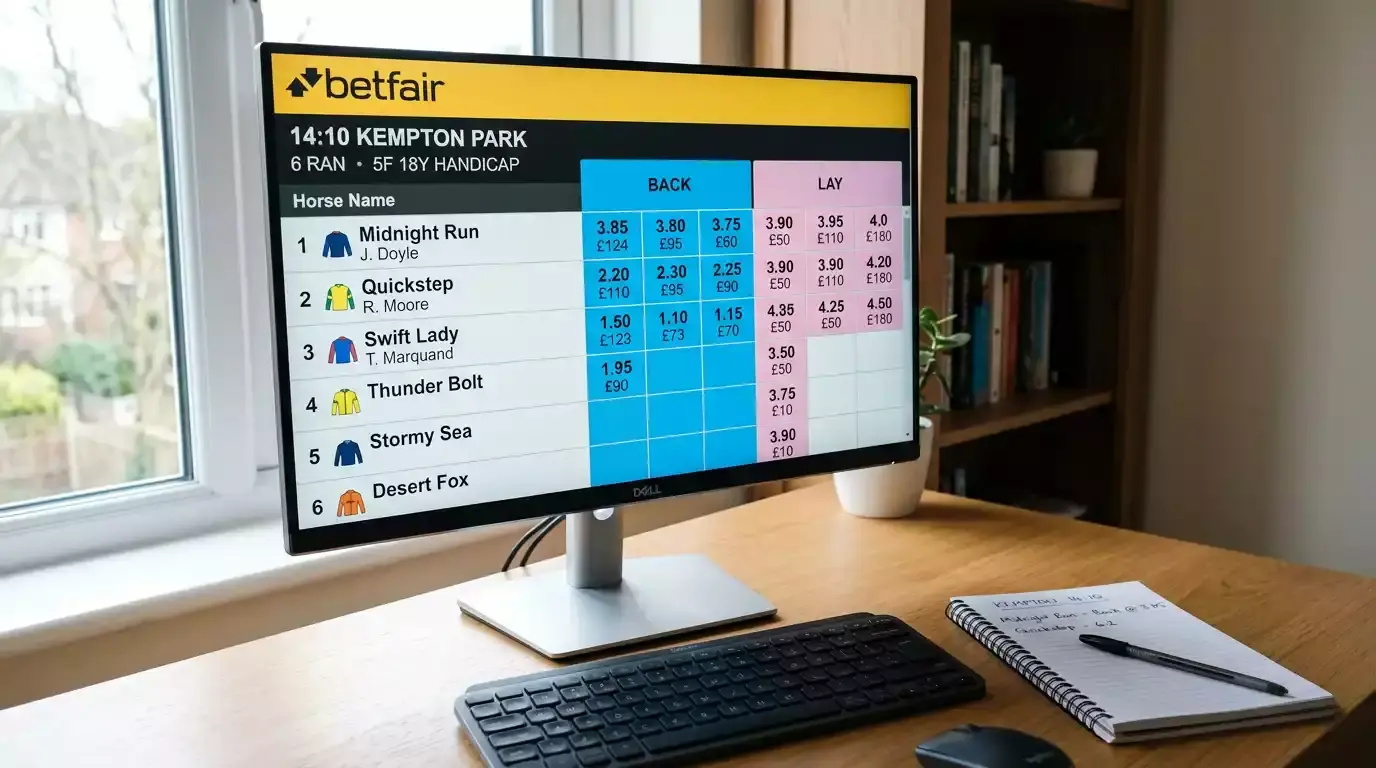
On a traditional bookmaker site, you are betting against the house. The bookmaker sets the odds, builds in a margin and takes your money if you lose. On an exchange like Betfair, there is no house. Every bet you place is matched against another punter who takes the opposite view. If you back a horse at 6.0, someone else has laid it at 6.0 – they are betting it will not win. The exchange takes a commission on winning bets, typically between 2% and 5%, rather than building margin into the odds themselves.
The practical effect is tighter pricing. Where a bookmaker might run a 115% book on a race, the equivalent exchange market often sits around 102-103%. That difference is real money. On a £50 bet at 5/1 with a traditional bookmaker, the implied overround means you are paying a hidden cost. The same selection on an exchange might be available at 6.2 in decimal – a meaningfully better price, even after commission.
The UK’s online gambling sector generates £7.8 billion in total gross gaming yield, and exchange betting accounts for a meaningful slice of the racing segment within that figure. The model has matured considerably since its launch in the early 2000s, with in-play exchange markets now standard on most UK and Irish races.
But exchanges have real limitations, and I would be doing you a disservice not to mention them. Liquidity is the main constraint. On a premier Saturday afternoon at Ascot or Cheltenham, the exchange market will be deep – millions of pounds matched, tight spreads, no problem getting your bet on. On a Tuesday afternoon at Sedgefield, the market might be wafer-thin. You could request 6.0 and sit there unmatched because nobody is willing to lay at that price. The money simply is not there.
There is another dimension that separates exchanges from bookmakers: laying. On an exchange, you can act as the bookmaker by laying a horse – betting that it will not win. If the horse loses, you keep the backer’s stake (minus commission). If it wins, you pay out the winnings. This opens up strategies that are impossible with traditional bookmakers, including trading positions by backing at a higher price and laying at a lower one to lock in a profit before the race starts, regardless of the result.
My general approach is to use bookmakers for races where I want BOG protection and for minor meetings where exchange liquidity is poor, and to use the exchange for premier races where the tighter margins justify the occasional unmatched bet. The two models complement each other, and any serious punter should be comfortable operating in both.