
The UK Gambling Commission licence is the single non-negotiable requirement when choosing where to bet on horse racing. It is not a quality badge or a recommendation — it is the minimum standard that separates a regulated operator from an unlicensed one. Without it, you have no protection if the bookmaker refuses to pay a winning bet, no recourse if your account is closed arbitrarily, and no guarantee that your deposited funds are held separately from the operator’s own money.
The scale of the licensed market is substantial. Online gambling in the UK generates £7.8 billion in gross gaming yield annually, representing 46% of the total gambling market. That figure is generated across hundreds of licensed operators, from the largest publicly traded companies to small independent bookmakers. The UKGC licence framework applies equally to all of them, imposing the same consumer protection standards regardless of size. Yet the number of physical betting shops has dropped to 5,825 — a 36% decline over the past decade — as the market has migrated online, making the ability to verify an online operator’s licence status more important than ever.
Regulatory Guarantees: How a UKGC Licence Protects Punters
A UKGC licence imposes specific obligations on the operator that directly benefit you as a customer. The most important is funds protection. Licensed operators must segregate customer funds from their own operational money using one of three methods: basic, medium, or high protection. At the basic level, customer funds are identified separately in the operator’s accounts but not ring-fenced. At the medium and high levels, funds are held in separate accounts or trust arrangements that provide greater protection if the operator becomes insolvent.
Fair terms and conditions are another licence requirement. Bookmakers must publish clear rules for settling bets, and those rules must be applied consistently. If you believe a bet has been settled incorrectly, the UKGC licence gives you a formal complaints route that begins with the operator and escalates to an independent Alternative Dispute Resolution provider. Without a licence, there is no escalation path — you are relying entirely on the operator’s goodwill.
Responsible gambling tools are mandated for all licence holders. Deposit limits, loss limits, time-outs, self-exclusion, and reality checks must be available and functional. The operator must also participate in GamStop, the national self-exclusion scheme. These tools are not optional extras or marketing features — they are licence conditions, and failure to implement them can result in regulatory action, fines, or licence revocation.
Data protection rounds out the core guarantees. Licensed operators must comply with UK data protection law, including GDPR, and the UKGC has additional requirements around how gambling data is stored, shared, and used. Your betting history, personal information, and financial details are subject to regulatory oversight that does not apply to unlicensed operators.
How to Check a Bookmaker’s Licence on the Gambling Commission Register
The UKGC maintains a public register of every licensed gambling operator at gamblingcommission.gov.uk. The process of checking a licence takes less than a minute. Navigate to the register, enter the operator’s name, and the search returns their licence status, licence number, the activities they are licensed for, and any regulatory actions taken against them.
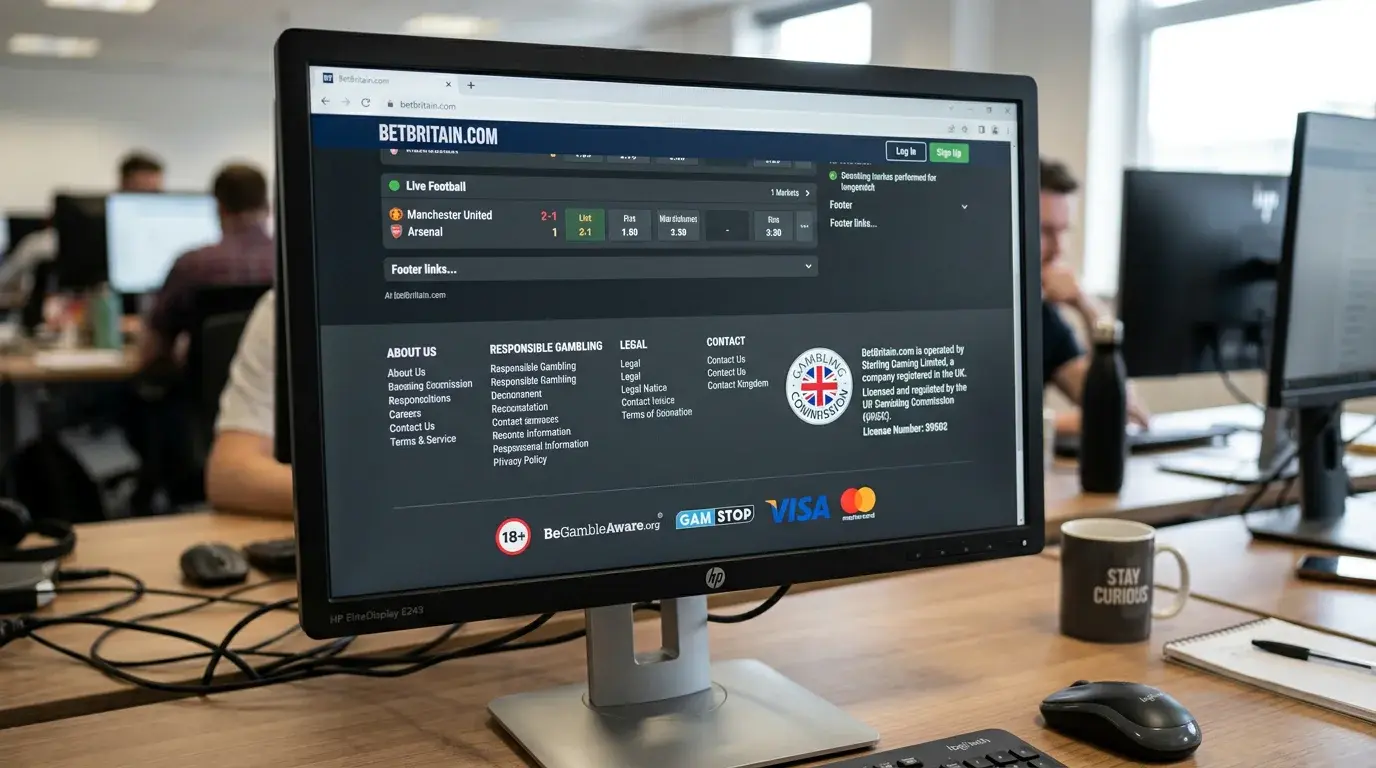
Every licensed operator is also required to display their licence number on their website, typically in the footer. The number follows a specific format and can be cross-referenced against the public register. If a bookmaker’s website does not display a licence number, or if the number it displays does not match the register, that is an immediate red flag. Close the site and do not deposit.
The register also shows the activities each licence covers. A bookmaker might hold a licence for remote betting (online), non-remote betting (betting shops), or both. Some operators hold additional licences for casino games, bingo, or lottery products. If you are specifically looking for a horse racing bookmaker, the relevant licence type is “remote general betting” for online operators or “non-remote general betting” for shop-based ones.
One detail that the register reveals and most punters overlook: regulatory actions. If a bookmaker has been fined, issued a warning, or had conditions attached to their licence, this information is publicly accessible. A single minor regulatory action is not necessarily a dealbreaker, but a pattern of enforcement activity suggests systemic problems with how the operator treats its customers or manages its obligations.
Dispute Resolution: What to Do When a Licensed Bookmaker Gets It Wrong
Licensed bookmakers are not perfect. Bets are sometimes settled incorrectly, accounts are restricted without adequate explanation, and promotional terms are occasionally applied in ways that feel unfair. The difference between a licensed and unlicensed operator is that the licensed one has to engage with your complaint through a structured process.
The first step is always the operator’s internal complaints procedure. Every licence holder must have one, and it must be accessible from the website. Submit your complaint in writing — email or the complaints form — with specific details: the date, the bet reference, what you believe went wrong, and what resolution you want. The operator has eight weeks to respond with a final decision.
If the operator’s response is unsatisfactory or if they fail to respond within eight weeks, you can escalate to an ADR provider. Every licensed bookmaker must be registered with an approved ADR service — the most common are IBAS (Independent Betting Adjudication Service) and eCOGRA. The ADR provider reviews the dispute independently and issues a decision that the operator is required to respect. The process is free for the customer.
The broader regulatory environment for UK racing is under considerable pressure. An open letter signed by 408 racing figures, addressed to the Secretary of State, argued that the landscape has changed and it is time for government and industry to work together to find better solutions, highlighting the unintended consequences of policies that affect both the betting market and the racing industry it supports. For punters, this means the regulatory framework is not static — the protections you have today may evolve as government, the UKGC, and the industry negotiate the future shape of regulated gambling in Britain.