
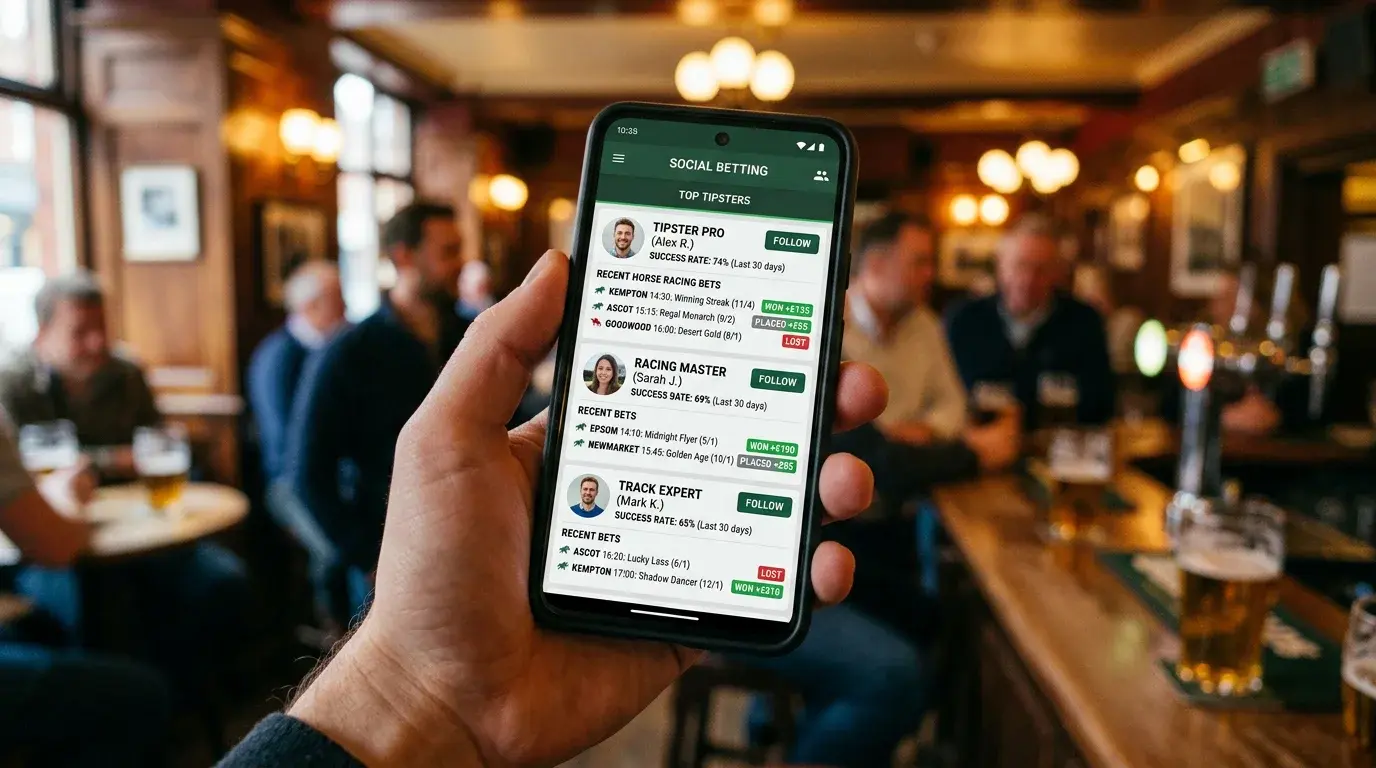
Copy betting — the practice of automatically replicating another bettor’s selections in your own account — has migrated from financial trading to horse racing with predictable results: a few genuinely skilled tipsters surrounded by a much larger crowd of mediocre ones, all made accessible through slick mobile platforms designed to make following someone else’s picks feel like a shortcut to profit. With 43% of UK betting now happening on mobile, the infrastructure for copy betting is built into the devices most punters already use, lowering the barrier to entry to the point where following a tipster is easier than studying form yourself.
That ease is the problem. Copy betting removes the most important skill in horse racing — the ability to assess form, identify value, and make independent decisions — and replaces it with trust in someone else’s ability. Whether that trust is justified depends entirely on the tipster you follow, and the tools for evaluating tipster performance are less robust than the platforms would have you believe.
Platform Mechanics: Verifying Tipster Records and Transparency
The basic mechanic is straightforward. You create an account on a copy betting or social betting platform, browse a directory of tipsters, and choose one or more to follow. When the tipster places a bet — or in some cases, publishes a selection — the platform either automatically places the same bet in your linked bookmaker account or sends you an alert to place it manually. Your stake is typically set by you, either as a fixed amount per bet or as a percentage of your bankroll, so you control how much you risk even though the selection is not yours.
Some platforms operate as overlays on existing bookmaker accounts, meaning your money stays with your bookmaker and the platform simply sends instructions. Others are standalone betting environments where you deposit funds directly and the platform handles execution. The standalone model is simpler for the user but introduces an additional layer of counterparty risk — your money is held by a platform rather than a regulated bookmaker.
The social element varies by platform. Some are purely transactional: you follow a tipster, their bets are copied, end of interaction. Others build community features around the betting — leaderboards, comment threads, tipping competitions, live discussions during races. The community-oriented platforms tend to attract casual bettors, particularly the 68% of racegoers who are casual or first-time visitors to the sport, who are looking for guidance rather than developing their own expertise.
Revenue models differ too. Some platforms charge a monthly subscription fee for access to premium tipsters. Others take a percentage of the follower’s winnings — typically 10-20% — creating a performance-based arrangement that aligns the platform’s incentives with the tipster’s results. A few operate on a freemium model where basic tips are free and detailed analysis or higher-confidence selections are behind a paywall. Understanding how the platform makes money tells you something about whose interests it serves.
Evaluating Tipster Track Records: What to Verify Before Following
The most important question is also the hardest to answer definitively: does this tipster actually make money? Platform-reported records are a starting point but not proof. The metrics you need to examine are: total number of bets (sample size), strike rate, average odds, return on investment at both advised prices and starting prices, and the length of the verified track record.
Sample size is the first filter. A tipster with a 30% strike rate from 50 bets might be skilled or might be lucky — the sample is too small to distinguish. A tipster with a 30% strike rate from 500 bets at average odds of 3/1 is almost certainly generating genuine value. Look for records that span at least six months and include a minimum of 200 bets before treating the numbers as meaningful.
Return on investment at advised prices versus starting prices is the tell that separates genuine value finders from market followers. If a tipster’s ROI at advised prices is +10% but at starting prices it is -3%, the value came entirely from taking early prices that shortened before the race. That is real skill, but it only benefits you if you can access those same early prices — which means being available to place the bet within minutes of it being advised. If you are relying on alerts that arrive hours later, the value has evaporated and you are betting at prices that generate losses.
Independent verification is the gold standard. Some tipster proofing services record tips as they are published and calculate returns independently of the tipster or the platform. If a tipster’s record is verified by an independent proofing service, the numbers carry more weight than self-reported records on the platform. If the record is not independently verified, treat it with scepticism — not because the tipster is necessarily dishonest, but because unverified records are subject to retrospective editing, selective reporting, and other biases that inflate apparent performance.
Risks of Copy Betting: Lag, Liquidity and Blind Following
The execution lag is the most practical risk. Horse racing odds move fast, particularly in competitive markets on race day. If a tipster advises a horse at 8/1 and you receive the alert three minutes later, the price might have shortened to 6/1 as other followers pile in. Over time, that consistent shortfall between the advised price and the price you actually get erodes the tipster’s edge to the point where a profitable record at advised prices translates to a losing record at executed prices. The gap is invisible in the platform’s headline numbers but real in your account balance.
Liquidity is the related constraint. If a tipster has 5,000 followers and advises a horse in a small midweek handicap, the collective weight of money from those followers can move the market dramatically. The first followers get close to the advised price; the last followers get significantly worse. This is the same mechanism that affects any popular tip source, but copy betting amplifies it because the execution is automated and near-simultaneous. The more popular a tipster becomes, the less value their followers collectively extract — a paradox that the platforms have no incentive to highlight.
Blind following is the long-term risk. When you copy someone else’s bets, you are outsourcing your decision-making entirely. If the tipster has a losing run — and every tipster does, because variance is inherent in horse racing — you have no framework for assessing whether the losses are normal variance or a genuine decline in skill. You do not know why the selections were made, what the reasoning was, or what changed. You are in the passenger seat with no map, and your only option when things go wrong is to stop following and start again with a different tipster — which is exactly what most copy bettors do, cycling through tipsters in search of a consistently winning record that very few can sustain.
The alternative — and the one I would always recommend — is to use copy betting as a learning tool rather than a profit strategy. Follow a skilled tipster, study their selections, try to understand why they are backing each horse, and use that understanding to develop your own analytical framework. The goal is not to copy someone else’s bets indefinitely but to absorb enough expertise to build your own approach. The best tipsters are not profitable because they have a secret — they are profitable because they do the work consistently. That work is learnable.